How to Lower Blood Pressure Quickly
Keeping your blood pressure in a healthy range is one of the simplest, highest-leverage things you can do for your long-term health. It’s the number your doctor checks at nearly every visit, and for good reason — it’s a direct window into how hard your heart and blood vessels are working, and how well they’re holding up.
What to Drink to Lower Blood Pressure
Hypertension is one of the most common health issues adults deal with, and it’s also one of the most responsive to lifestyle changes — especially diet and exercise. Diet in particular plays an outsized role: what you eat and drink day to day has a direct effect on your numbers, and getting it right is one of the most reliable ways to protect your heart over the long run.
Food tends to get most of the attention, but what you drink matters just as much — and it’s often the easier habit to change. Below are the drinks worth adding to your routine if lowering your blood pressure quickly and sustainably is the goal.
High blood pressure — hypertension — is one of the most common health issues adults face, and one of the most manageable through everyday habits. Before reaching for medication, doctors typically point to two levers: movement and diet. Of the two, what you drink is often the easiest place to start, and it’s frequently overlooked in favor of what you eat.
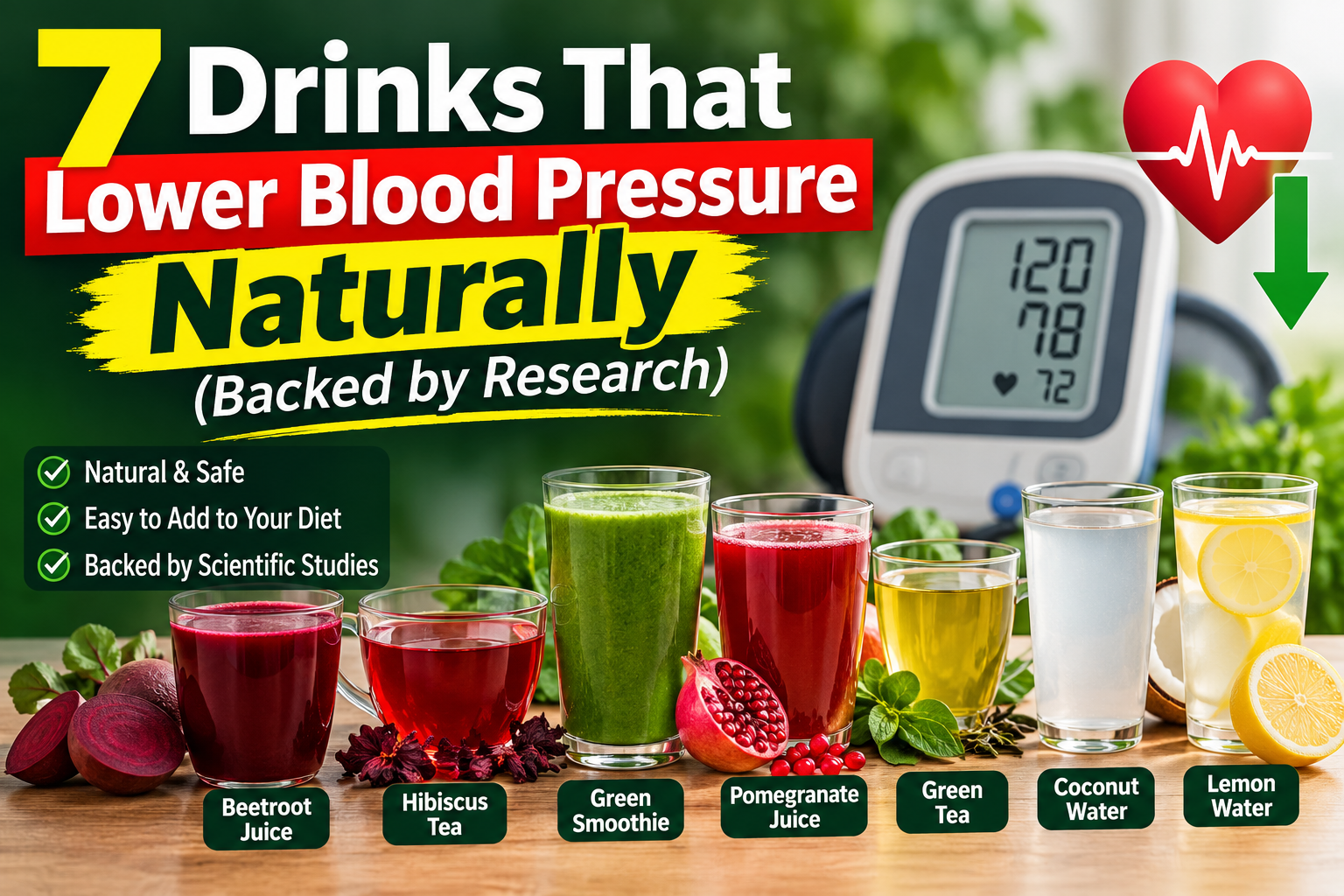
Below are seven everyday drinks tied to real research on blood pressure.
— but each is affordable, easy to find, and backed by measurable data. We’ve noted where the evidence is strongest so you know what to try first.
Currently on blood pressure medication? Talk to your doctor before adding beet juice, ginger, or other nitrate-rich drinks in quantity — some can interact with or amplify the effects of certain medications. This article is educational, not a substitute for medical advice.
Want a done-for-you way to bring your numbers down? If you’d rather follow a guided, step-by-step practice than track drinks on your own, see the Pulse & Calm audio course → (sponsored link — a paid relaxation-based program, not affiliated with the research below).
1. Beet Juice
Beets are naturally high in dietary nitrates. Once consumed, the body converts these into nitric oxide, a compound that relaxes and widens blood vessels — easing the pressure the heart has to work against.
How to use it: Fresh or cold-pressed beet juice, a small glass on its own or blended into a smoothie.
2. Green Tea
Green tea is rich in flavonoids and polyphenols, plant compounds linked to protective effects on blood vessels. Larger studies associate a daily cup with a drop of roughly 2 mmHg in blood pressure — a modest but consistent effect that can compound over time.
How to use it: Hot or iced, unsweetened. Added sugar works against the benefit.
3. Ginger Tea
Ginger shows one of the more pronounced effects on this list. Supplementation studies link it to a systolic blood pressure reduction of around 7 mmHg, with diastolic pressure dropping by about 2 mmHg.
How to use it: Steep fresh-cut ginger, ginger powder, or ginger paste — or stir it into green tea for a combined effect.
4. Psyllium Husk (in Water)
Best known as an appetite-curbing fiber, psyllium husk stirred into water before a meal can reduce overeating and excess sodium intake — both drivers of elevated blood pressure over time.
How to use it: Start with one dose daily, increasing gradually as your body adjusts to the added fiber.
5. Water
The most basic — and most skipped — lever on this list. Proper hydration keeps blood volume and circulation working as they should. Some research suggests water fortified with calcium and magnesium offers an added benefit.
How to use it: There’s no single magic number, but roughly eight glasses spread through the day is a reasonable target for most adults.
6. Skim Milk
Skim milk carries calcium, vitamin D, potassium, and protein without the saturated fat found in whole milk — placing less strain on the heart and blood vessels over time.
How to use it: A simple swap from whole or 2% milk in your existing routine.
7. Cranberry Juice
Low-calorie cranberry juice has been linked in studies to several cardiovascular benefits, including a reduction in diastolic blood pressure specifically.
How to use it: A small glass of the low-calorie (not cocktail-blend) version daily.
Which One Should You Try First?
If you want the strongest single data point, start with ginger tea. If you want the easiest habit to build, start with water — it’s the one everyone can do today at zero cost.
Diet is one part of the picture. Stress is the other, and it’s harder to fix with a grocery list. If tracking drinks isn’t realistic for your routine, a guided relaxation practice is a lower-effort way to work on the same goal from a different angle — take a look at Pulse & Calm here → (sponsored link).
Frequently Asked Questions
How fast can a drink actually lower blood pressure? Some effects, like the nitric oxide response to beet juice, can begin within a few hours. Others, like the vessel-protective effects of green tea, build with consistent daily use over weeks.
Can I combine several of these drinks in one day? Yes — many people rotate two or three, such as ginger green tea in the morning and water with meals throughout the day. Watch total caffeine if combining multiple teas, and introduce psyllium husk gradually.
Do these replace blood pressure medication? No. They’re a supportive dietary habit, not a replacement for prescribed treatment. Always loop in your doctor before changing your routine, especially if you’re already being treated for hypertension.
Ready to make this part of your routine? Start with the Pulse & Calm guided course → (sponsored link — paid partner offer, not part of the research cited above)