If you want to know how to fall asleep fast, you’re not alone.
For months I dealt with mild insomnia — not stressed all day, not drinking coffee at night — but the moment my head hit the pillow, my brain refused to shut off. Racing thoughts. Endless loops. Staring at the ceiling at 1 a.m. wondering why sleep felt impossible when I was exhausted.
Then I found five simple night habits that completely changed everything. No medication. No melatonin dependency. No expensive gadgets. Just practical adjustments that work with your body instead of against it — and start delivering results within the first week.
Still Lying Awake at Night Despite Being Exhausted?
You don’t need another sleep tip. You need a complete, proven system that tells your brain it’s safe to switch off.
The Better Daily Sleep program is a structured, step-by-step guide built around the exact habits in this article — designed for people who’ve tried everything and still can’t get the rest they need. Tonight could be different. But only if you act on what you learn.
Why You Can’t Fall Asleep (Even When You’re Tired)
Most sleep problems aren’t about being broken — they’re about overstimulation and inconsistent habits.
Bright screens, mental overload, irregular sleep times, and chronic low-level stress keep your nervous system locked in a “threat-scanning” mode. Your body doesn’t know it’s safe to power down. So it doesn’t.
The goal isn’t forcing sleep. The goal is creating the biological conditions where sleep happens naturally — and that’s entirely within your control.
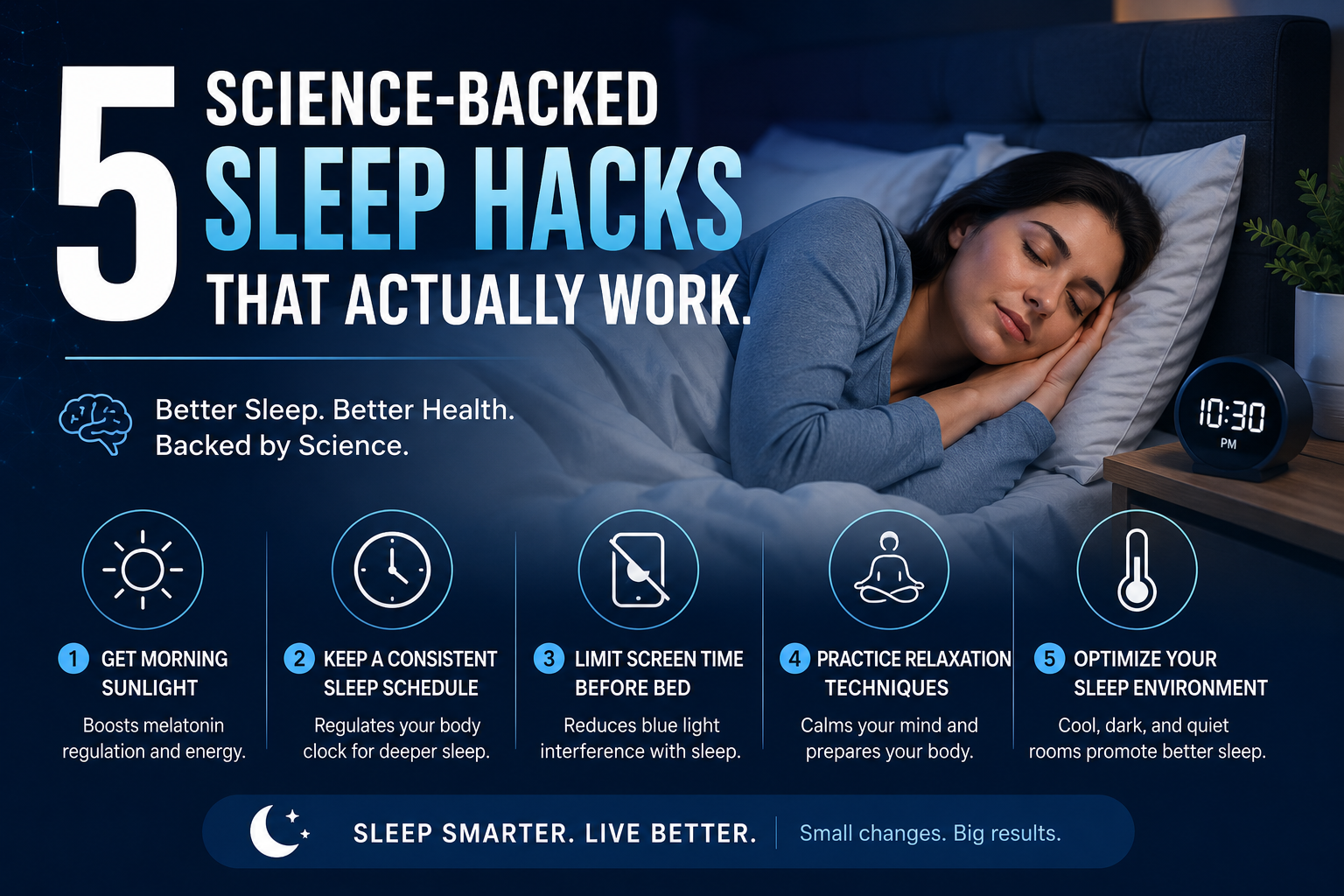
Habit 1: Fix Your Sleep Schedule First
If you want to fall asleep in 10 minutes, your body needs rhythm.
Your brain operates on a circadian rhythm — a precise 24-hour internal clock that regulates when you feel alert and when you feel sleepy. When you go to bed at wildly different times each night, that clock gets confused. Your body never knows when to start releasing melatonin. So it doesn’t — until hours after you’ve been lying there frustrated.
The fix is brutally simple: choose a consistent bedtime and protect it. I set a “WIND DOWN” alarm 30 minutes before my target time, woke at the same time every morning — even weekends — and within 7–10 days, I started feeling naturally sleepy right at bedtime.
This is one of the most powerful insomnia solutions in existence. It costs nothing. It just requires consistency.
Pro tip: Label your phone alarm “WIND DOWN” — not just an alarm tone. The mental cue matters. It trains your brain to begin anticipating sleep before you’ve even moved.
Habit 2: Build a 30-Minute Wind-Down Routine
You cannot go from scrolling social media at full brightness to deep sleep in five minutes. Your brain doesn’t work that way — and fighting that biology is why millions of people lie awake feeling like they’re “bad at sleeping.”
Think of your wind-down routine as braking before you stop. Your nervous system needs a transition period to shift from sympathetic (alert) to parasympathetic (rest) mode.
My routine: dim all lights at 9:30 p.m., no phone scrolling, light stretching, reading something calm. Blue light from screens actively suppresses melatonin production — your primary sleep hormone. Remove the screens, and your body starts producing it naturally within minutes.
Pro tip: Swap your phone for a physical book. Even 10 minutes of reading a calm, non-stimulating book has been shown to accelerate sleep onset dramatically — it’s one of the simplest and most underused sleep tools available.
Habit 3: Do a 5-Minute Brain Dump Before Bed
Overthinking is the single biggest cause of the “tired but can’t sleep” problem.
Your brain treats unfinished tasks as open loops — and open loops demand attention. Even if you’re physically exhausted, your prefrontal cortex will keep scanning through your mental to-do list, replaying conversations, rehearsing tomorrow’s challenges.
The fix: Before bed, write down every task for tomorrow, every worry, every random thought circling your mind. When it’s on paper, your brain stops treating it as urgent. The loop closes.
I pair this with the 4–7–8 breathing method: inhale for 4 seconds, hold for 7, exhale for 8. This technique directly activates your parasympathetic nervous system — triggering the physiological relaxation response. Heart rate drops. Blood pressure falls. Sleep follows.
Pro tip: Keep a dedicated “worry journal” on your nightstand. Writing it down sends a signal to your brain that the problem is handled — so it stops looping it. This single habit eliminated most of my nighttime anxiety within a week.
Habit 4: Use Natural Sleep Signals That Cue Your Body
You don’t need heavy sleep aids. In many cases, small, consistent biological signals are enough to cue deep, restorative sleep.
What worked for me: chamomile tea 45 minutes before bed, a warm shower (the subsequent drop in body temperature mimics the natural cooling that occurs at sleep onset), lowering my thermostat to 66°F, and a small magnesium-rich evening snack.
Your body sleeps best when core temperature decreases slightly. A cooler bedroom — between 65–68°F — is one of the most consistently research-backed environmental factors for sleep quality. It’s not a luxury. It’s biology.
Pro tip: Magnesium glycinate taken 30 minutes before bed is one of the most research-supported natural sleep aids available without a prescription — it supports the GABA pathways responsible for relaxation and sleep initiation.
Habit 5: Optimize Your Sleep Environment
Your bedroom should communicate one single message to your brain: it is safe to sleep here.
Every exception you make — scrolling in bed, working from your laptop under the covers, watching intense TV — trains your brain to associate your bed with alertness. That association then works against you every night.
My changes were simple: blackout curtains, phone charged in another room, cooler temperature, clean comfortable bedding. The blackout curtains alone had a bigger impact than I expected — even small amounts of light disrupt melatonin secretion and reduce sleep depth.
Pro tip: Charge your phone outside your bedroom entirely. Even having it nearby — face down, on silent — keeps a portion of your brain on low-level alert. Remove the device, remove the alertness.
My Results After 2 Weeks
| Before | After 2 Weeks |
|---|---|
| Taking 1+ hour to fall asleep | Falling asleep in 10–15 minutes |
| Waking up multiple times at night | Fewer nighttime disruptions |
| Low energy every morning | Noticeably improved morning energy |
| High nighttime anxiety | Nighttime anxiety dropped significantly |
The change wasn’t magic. It was system. Five habits, applied consistently, compounding over 14 days.
Want These 5 Habits Laid Out in a Simple Daily System You Can Follow Tonight?
Reading about habits is one thing. Having a structured, guided program that walks you through exactly what to do — and when — is what produces the results in that table above.
Inside you’ll find a clear nightly routine, deeper techniques for stubborn insomnia, and a day-by-day plan for resetting your sleep biology — even if you’ve struggled for years. Thousands are already waking up rested. You can too.
How to Fall Asleep Fast: 5-Habit Quick Reference
| # | Habit | Why It Works | Start Tonight |
|---|---|---|---|
| 1 | Fixed sleep schedule | Syncs circadian rhythm | Pick a bedtime and protect it |
| 2 | 30-min wind-down | Triggers melatonin naturally | No screens 30 min before bed |
| 3 | Brain dump + 4-7-8 breathing | Clears mental clutter + calms nervous system | Write 3 worries + breathe |
| 4 | Natural sleep signals | Cues body temperature drop + relaxation | Chamomile tea + cooler room |
| 5 | Sleep environment | Builds bed-sleep association | Blackout curtains + phone out |
Bottom Line: How to Fall Asleep Fast — Tonight
Understanding how to fall asleep fast comes down to one thing: building the right biological conditions — not forcing sleep.
Fix your schedule. Reduce stimulation. Clear your mind. Cool your room. Remove your phone. These five habits aren’t complicated. They’re not expensive. They just require consistency — and a willingness to stop fighting your biology and start working with it.
Most sleep struggles aren’t medical. They’re habitual. And habits can be changed.
You are not broken. You just need a better system.
Tonight Doesn’t Have to Look Like Last Night
You’ve read the habits. You know what’s been working against you. The only step left is putting it all into a system you’ll actually use.
👉 Start the Sleep-Hacking Program Tonight — Click Here Before You Go to Bed
Join thousands of people who finally stopped dreading bedtime — and started waking up feeling genuinely rested. Your best night’s sleep is closer than you think.

| Before | After 2 Weeks |
| Taking 1+ hour to fall asleep | Falling asleep in 10–15 minutes |
| Waking up multiple times at night | Fewer nighttime disruptions |
| Low energy every morning | Noticeably improved morning energy |
| High nighttime anxiety | Nighttime anxiety dropped significantly |
How to Fall Asleep Fast: 5-Habit Quick Reference
| # | Habit | Why It Works | Start Tonight |
| 1 | Fixed sleep schedule | Syncs circadian rhythm | Pick a bedtime and stick to it |
| 2 | 30-min wind-down | Triggers melatonin naturally | No screens 30 min before bed |
| 3 | Brain dump + 4-7-8 | Clears mental clutter | Write 3 worries + breathe |
| 4 | Natural sleep remedies | Signals body to cool + relax | Chamomile tea + cooler room |
| 5 | Sleep environment | Builds bed-sleep association | Blackout curtains + phone out |
Bottom Line: How to Fall Asleep Fast Tonight
Understanding how to fall asleep fast comes down to building the right conditions — not forcing sleep. Fix your schedule, reduce stimulation, clear your mind, and optimize your environment. Most sleep struggles are habit-related, not permanent. Start with one habit tonight. Consistency beats perfection, and your body already knows how to sleep.
Disclaimer: This article reflects personal experience and is for informational purposes only. It does not constitute medical advice. If you are experiencing severe or chronic insomnia, please consult a qualified healthcare professional.
Disclosure: This post contains affiliate links. If you purchase through our link, we may earn a small commission at no extra cost to you. We only recommend programs we believe deliver genuine value.