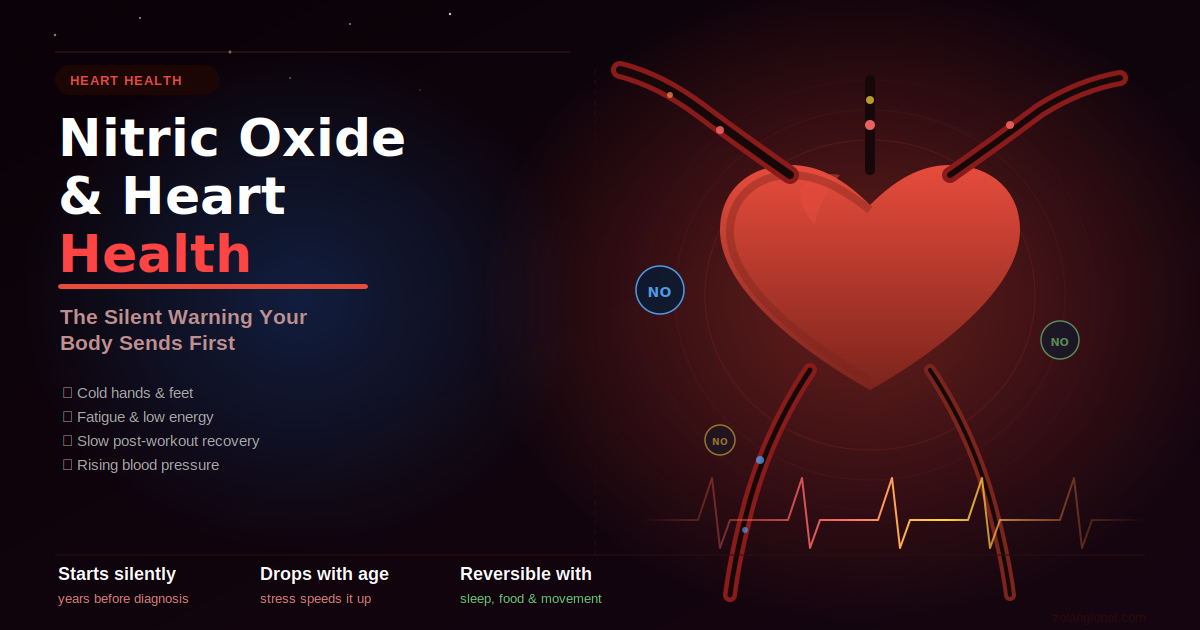
Most people don’t think about their heart health until something forces them to — a chest pain, a worrying test result. But the connection between nitric oxide and heart health begins to break down long before that
But long before any of that happens, something quieter is already underway. The connection between nitric oxide and heart health begins to break down — silently, gradually, and years before any diagnosis.
When nitric oxide drops, your blood vessels stop relaxing the way they should. Blood flow slows. Your heart has to work harder just to do its normal job. You may feel tired, short of breath, or simply “off” without being able to explain why — and your heart is often the one quietly paying the price while you carry on assuming everything is fine.
This is the conversation most standard health check-ups never have with you. And it may be the most important one for your long-term heart health.
Is Your Heart Working Harder Than It Should — Right Now?
Low nitric oxide is one of the earliest and most overlooked signs of cardiovascular stress. Most people don’t know their levels are declining until the symptoms become impossible to ignore.
Designed specifically to support nitric oxide production, healthy blood vessel flexibility, and cardiovascular function — for people who want to protect their heart health before it becomes a crisis. The earlier you act, the better your long-term outcomes.
How Nitric Oxide and Heart Health Are Connected
Nitric oxide is not a supplement or a drug. It is a molecule your body produces naturally — and it is one of the most critical regulators of cardiovascular function your body has.
Here is what it does: nitric oxide signals the smooth muscle cells lining your blood vessels to relax and widen — a process called vasodilation. When this works properly, blood moves easily through flexible, open vessels. Oxygen and nutrients reach every organ efficiently. Your heart pumps at a normal workload. Blood pressure stays in a healthy range.
When nitric oxide levels decline — as they naturally do with age, stress, poor diet, and inactivity — that signal weakens. Blood vessels constrict and stiffen. Blood pressure rises. Blood flow becomes less efficient. And your heart, forced to push blood through increasingly resistant vessels, begins working overtime just to maintain normal circulation.
Over months and years, this sustained extra workload weakens the heart muscle, accelerates arterial stiffening, and raises the risk of serious cardiovascular events. The link between nitric oxide and heart health isn’t peripheral science — it is one of the most researched connections in modern cardiovascular medicine.
Warning Signs of Low Nitric Oxide
The decline in nitric oxide rarely announces itself dramatically. It presents as symptoms most people dismiss, attribute to aging, or simply accept as their new normal — often years before any clinical diagnosis.
| Symptom | What It Means |
|---|---|
| Cold hands and feet | Poor peripheral circulation from constricted blood vessels |
| Low energy and persistent fatigue | Reduced oxygen delivery to muscles and organs |
| Slow recovery after exercise | Less blood flow means slower muscle repair and nutrient delivery |
| Getting worn out faster than before | Heart working overtime even during light or routine activity |
| Feeling “off” without an obvious cause | Early cardiovascular strain before symptoms become obvious |
| Higher resting blood pressure | Vessels unable to relax and maintain healthy dilation |
| Brain fog and poor concentration | Reduced cerebral blood flow from vascular constriction |
If several of these feel familiar — your nitric oxide levels deserve serious attention. These are not signs of aging you simply accept. They are signals your cardiovascular system is under strain that is addressable.
Why This Process Starts Years Before Any Diagnosis
This is the part most people find most unsettling — and most important.
The decline in nitric oxide and heart health doesn’t begin at 60 or 70. Research shows that nitric oxide production starts declining measurably in your 30s and 40s — long before cardiovascular disease is typically diagnosed, and long before symptoms become alarming enough to prompt a doctor’s visit.
Here is what happens in the meantime: blood vessels gradually lose flexibility, a process called arterial stiffening. The heart silently compensates — pumping harder, adapting its rhythm, working at a slightly higher baseline effort. Because the change is gradual, the body adjusts without obvious alarm signals. You feel mildly less energetic. Recovery takes a little longer. You chalk it up to getting older.
By the time symptoms become impossible to ignore, the vascular changes that drove them have often been building for a decade or more.
The window to protect nitric oxide and heart health is not after a diagnosis. It is now — while the vessels are still responding, while the heart is still adapting, while the habits and support you introduce today can make a measurable difference over the next decade.
Don’t Wait for a Wake-Up Call Your Heart Can’t Afford to Give You
The research is clear: supporting nitric oxide levels early produces dramatically better cardiovascular outcomes than intervening after damage has accumulated.
Formulated with clinically studied ingredients that support nitric oxide production, vascular flexibility, and healthy circulation — for people who understand that protecting their heart is a decision made years before the emergency, not during it. Thousands are already taking this step. Your heart is worth the same investment.
Daily Habits That Protect Nitric Oxide and Heart Health
The encouraging truth about the nitric oxide and heart health connection is this: nitric oxide levels respond powerfully to everyday habits. Your body has the biological machinery to produce more of it — it just needs the right inputs consistently.
Move regularly — even a 20-minute brisk walk measurably increases nitric oxide production by stimulating the endothelial cells lining your blood vessels. Physical movement is one of the most direct signals your body receives to upregulate nitric oxide synthesis.
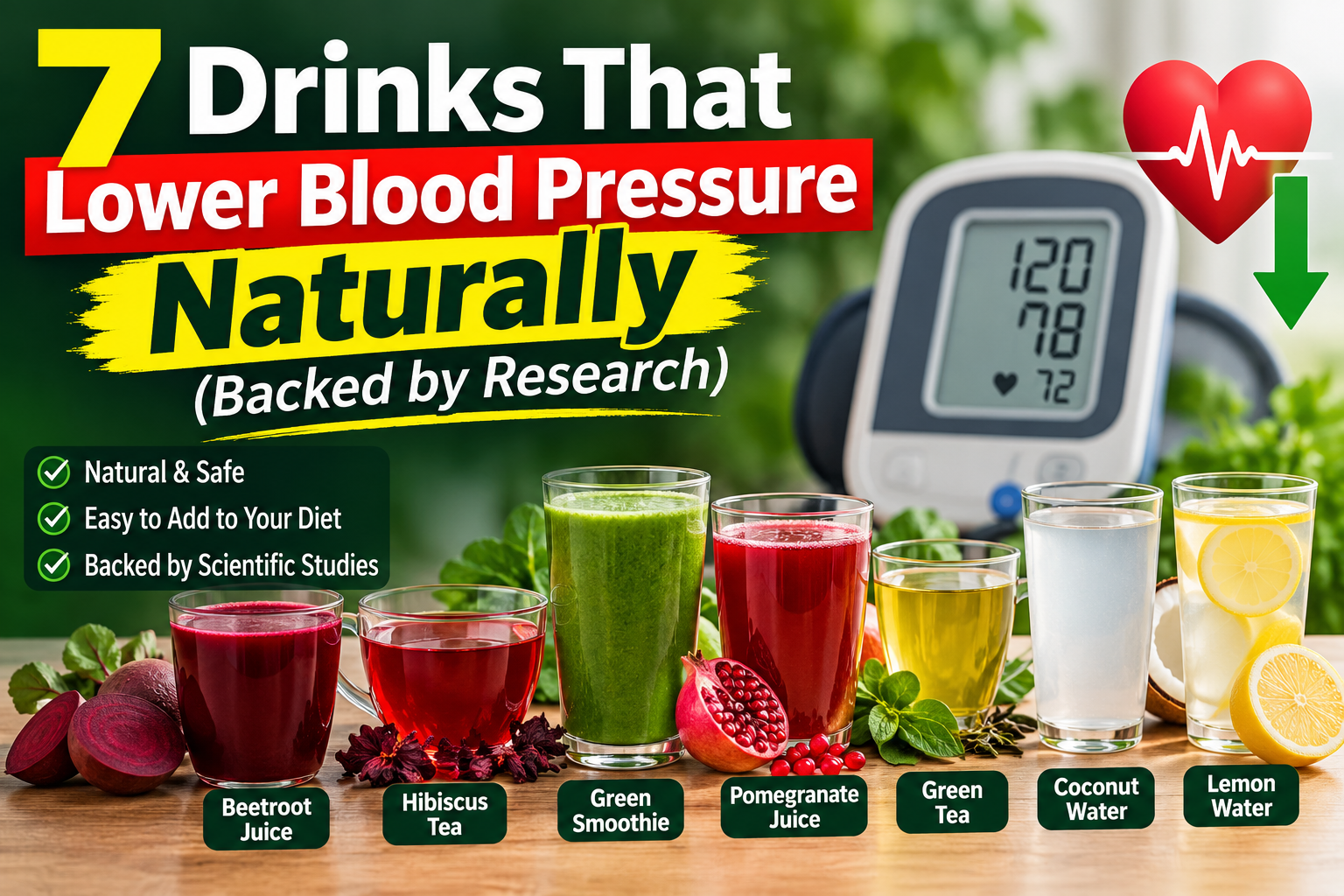
Eat nitrate-rich foods — leafy greens (spinach, arugula, rocket), beetroot, and celery are among the richest dietary sources of inorganic nitrates that your body converts to nitric oxide. Adding these to your daily diet is one of the most evidence-supported nutritional steps for cardiovascular health.
Protect your sleep — deep sleep is when your blood vessels undergo the most significant repair and restoration. Chronic sleep deprivation accelerates endothelial dysfunction — the same vessel-lining damage that reduces nitric oxide production. Aim for 7–9 hours with consistent timing.
Manage chronic stress — cortisol, your primary stress hormone, directly suppresses nitric oxide production and promotes vascular inflammation. Chronic stress is one of the fastest ways to deplete the nitric oxide levels your heart depends on.

Eliminate smoking — nicotine and tobacco combustion products directly damage the endothelial cells responsible for nitric oxide synthesis. Smoking is one of the most efficient destroyers of cardiovascular nitric oxide function known to medicine.
Support internally with targeted nutrition — even with optimal diet and lifestyle, nitric oxide production declines with age due to biological changes in the endothelium. Targeted nutritional support fills the gap that lifestyle alone cannot fully close — particularly after 40.
The Bottom Line: Nitric Oxide and Heart Health
Understanding the connection between nitric oxide and heart health is not abstract science. It is one of the earliest and most actionable warnings your cardiovascular system offers — long before it starts shouting for attention.
Your blood vessels are flexible or they are stiffening. Your heart is working at a normal load or it is compensating. Your nitric oxide levels are healthy or they are declining. These things are happening right now — and the direction they go is heavily influenced by the choices you make today.
The people who protect their heart health most effectively are not the ones who respond to crises. They are the ones who recognise the quiet signals years earlier and act on them — consistently, daily, before the stakes become urgent.
Your heart has been working for you every second of your life. This is how you start working for it.
Take the Step Your Heart Has Been Waiting For — Starting Today
You now understand the connection. You know the warning signs. You know what your daily habits can do. The only remaining step is giving your body the targeted internal support that makes every habit on this list work harder.
👉 Try the Nitric Oxide Support Formula Today — Click Here Before Stock Runs Out
Join thousands of people who stopped leaving their cardiovascular health to chance — and started giving their heart the daily support it needs to stay strong, flexible, and working efficiently for decades to come. Your best years are still ahead. Protect them.
Medical Disclaimer: This article is for informational purposes only and does not constitute medical advice. If you are experiencing chest pain, shortness of breath, or other cardiovascular symptoms, seek immediate medical attention. Consult a qualified healthcare professional before beginning any new supplement, especially if you have existing cardiovascular conditions or take prescription medications.
Disclosure: This post contains affiliate links. If you purchase through our link, we may earn a small commission at no extra cost to you. We only recommend products we believe deliver genuine value.