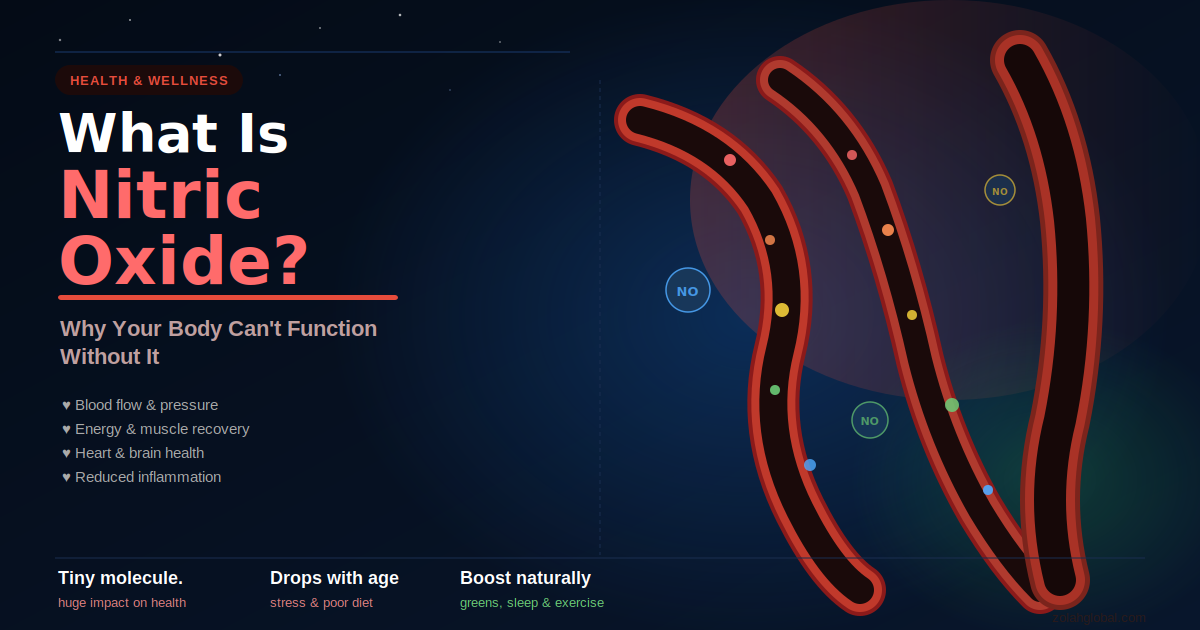
What Is Nitric Oxide? Why This Molecule Is the Key to Your Energy, Circulation, and Heart Health
Most people have never heard of nitric oxide — but without it, your body would struggle to function in ways you’d feel every single day.
It’s not a vitamin. Not a hormone. Not a supplement. It is a molecule your body produces naturally — and it quietly controls how well your blood flows, how much energy you have, how fast you recover from physical effort, how well your heart protects itself, and even how clearly your brain thinks.
Nitric oxide is one of the most important molecules in your body. And for most people over 40, levels are declining faster than they realise.
If you’ve been experiencing unexplained fatigue, poor circulation, sluggish workout recovery, rising blood pressure, or persistent brain fog — this molecule may be a significant part of the explanation. Here’s what it is, what it does, why it drops, and exactly how to support it.
Feeling Tired, Foggy, or Slow to Recover — Even When You’re Doing Everything Right?
Low nitric oxide is one of the most overlooked explanations for the symptoms most people attribute to “just getting older.”
Formulated specifically to support healthy nitric oxide production, vascular flexibility, and blood flow — for people who want to feel the difference that restored circulation makes in daily energy, physical performance, and cardiovascular health. Don’t accept fatigue and foggy thinking as your new normal.
What Is Nitric Oxide?
Nitric oxide (NO) is a signalling molecule — a small gas your body produces naturally in the cells lining your blood vessels, called endothelial cells.
Its primary job is elegant in its simplicity: it tells your blood vessels to relax and widen. This process — called vasodilation — allows blood to move more freely through your circulatory system, delivering oxygen, glucose, and nutrients to every tissue that needs them. Muscles. Brain. Heart. Kidneys. Every organ in your body depends on this delivery system functioning properly.
Think of your blood vessels as a network of roads. Nitric oxide is the signal that keeps those roads wide open and traffic flowing smoothly. When production drops, the roads narrow. Traffic backs up. Delivery slows. Everything downstream — your energy, your performance, your recovery, your organ function — starts to suffer.
This is why nitric oxide is considered one of the most significant discoveries in cardiovascular science. In 1998, the researchers who identified its role in vascular biology won the Nobel Prize in Physiology or Medicine — reflecting just how fundamental this molecule is to human health.
What Does Nitric Oxide Do in Your Body?
Nitric oxide’s influence extends far beyond blood pressure. It plays a critical role in virtually every system that determines how you feel and function day to day.
Healthy blood flow and blood pressure — vasodilation keeps vessels flexible and reduces the resistance your heart must overcome with every beat. This directly lowers blood pressure and reduces cardiovascular strain.
Heart protection — This molecule inhibits the formation of arterial plaques, reduces vascular inflammation, and prevents platelets from clumping together abnormally. It is one of your cardiovascular system’s primary self-protective mechanisms.
Brain function and mental clarity — your brain requires approximately 20% of your body’s total blood supply. Improved cerebral circulation from healthy this molecule levels directly supports focus, memory, processing speed, and the clearance of metabolic waste products that contribute to brain fog.
Muscle performance and recovery — during exercise, nitric oxide increases blood flow to working muscles, improving oxygen delivery and performance. After exercise, it accelerates nutrient delivery to damaged tissue, speeding recovery and reducing soreness.
Energy production — mitochondria — your cells’ energy generators — depend on efficient oxygen delivery. When blood flow improves, mitochondrial function improves, and energy output increases at the cellular level.
Sexual health — nitric oxide is the primary mechanism behind healthy erectile function in men and sexual arousal response in women. Vascular health and sexual health are directly linked through this molecule.
Immune function and healing — immune cells use this molecule to fight pathogens and coordinate inflammatory responses. Healthy levels support faster wound healing and more efficient immune defence.
Why Nitric Oxide Levels Drop — And Why It Happens Faster Than You Think
Here is the part most people find most concerning once they understand it: nitric oxide production declines naturally and significantly with age — and the decline begins earlier than most people expect.
Research shows that by age 40, most people have lost approximately 50% of their peak nitric oxide production capacity. By age 70, levels may be as low as 15–25% of youthful baseline. This is not a minor fluctuation — it is a fundamental shift in your body’s ability to regulate circulation, protect the heart, fuel muscles, and maintain the vascular health that underlies virtually every aspect of physical performance and wellbeing.
And age is only one factor. Several lifestyle elements accelerate the decline significantly:
Poor diet — a diet low in vegetables (particularly leafy greens and beetroot) deprives the body of the dietary nitrates it converts to nitric oxide. Highly processed foods promote endothelial inflammation that impairs production.
Physical inactivity — movement is one of the primary stimuli for nitric oxide production. Shear stress from blood flow against vessel walls triggers endothelial cells to synthesise NO. A sedentary lifestyle progressively reduces this stimulus.
Chronic stress — elevated cortisol promotes vascular inflammation and directly suppresses the enzyme (eNOS) responsible for nitric oxide synthesis.
Smoking — tobacco smoke contains compounds that directly damage and destroy endothelial cells. Every cigarette reduces your body’s capacity to produce nitric oxide.
Poor sleep — deep sleep is when your vascular endothelium undergoes the most significant repair and restoration. Chronic sleep deprivation accelerates endothelial dysfunction.
When nitric oxide drops, the consequences compound: blood vessels constrict and stiffen, circulation becomes less efficient, blood pressure rises, the heart works harder, muscles fatigue faster, recovery slows, brain fog thickens, and energy declines. These are not separate problems with separate causes — they are all downstream effects of the same molecule declining.
How to Naturally Boost Nitric Oxide Production
The encouraging truth is that nitric oxide production responds powerfully to the right inputs. Your endothelial cells retain the capacity to increase synthesis — they just need the right signals consistently.
| Method | Why It Works |
|---|---|
| Eat leafy greens and beetroot | Rich in dietary nitrates that your body converts directly to nitric oxide via the nitrate-nitrite-NO pathway |
| Exercise regularly | Physical movement creates shear stress on vessel walls, directly stimulating eNOS (nitric oxide synthase) enzyme activity |
| Protect sleep quality | Deep sleep restores endothelial function and allows vascular repair that supports NO production |
| Manage chronic stress | Reducing cortisol removes one of the primary suppressors of nitric oxide synthesis |
| Avoid smoking | Eliminating tobacco exposure stops the active destruction of the endothelial cells that produce NO |
| Support with targeted nutrition | Key precursors — L-arginine, L-citrulline — and antioxidants that protect NO from oxidative degradation provide what diet alone may not fully supply |

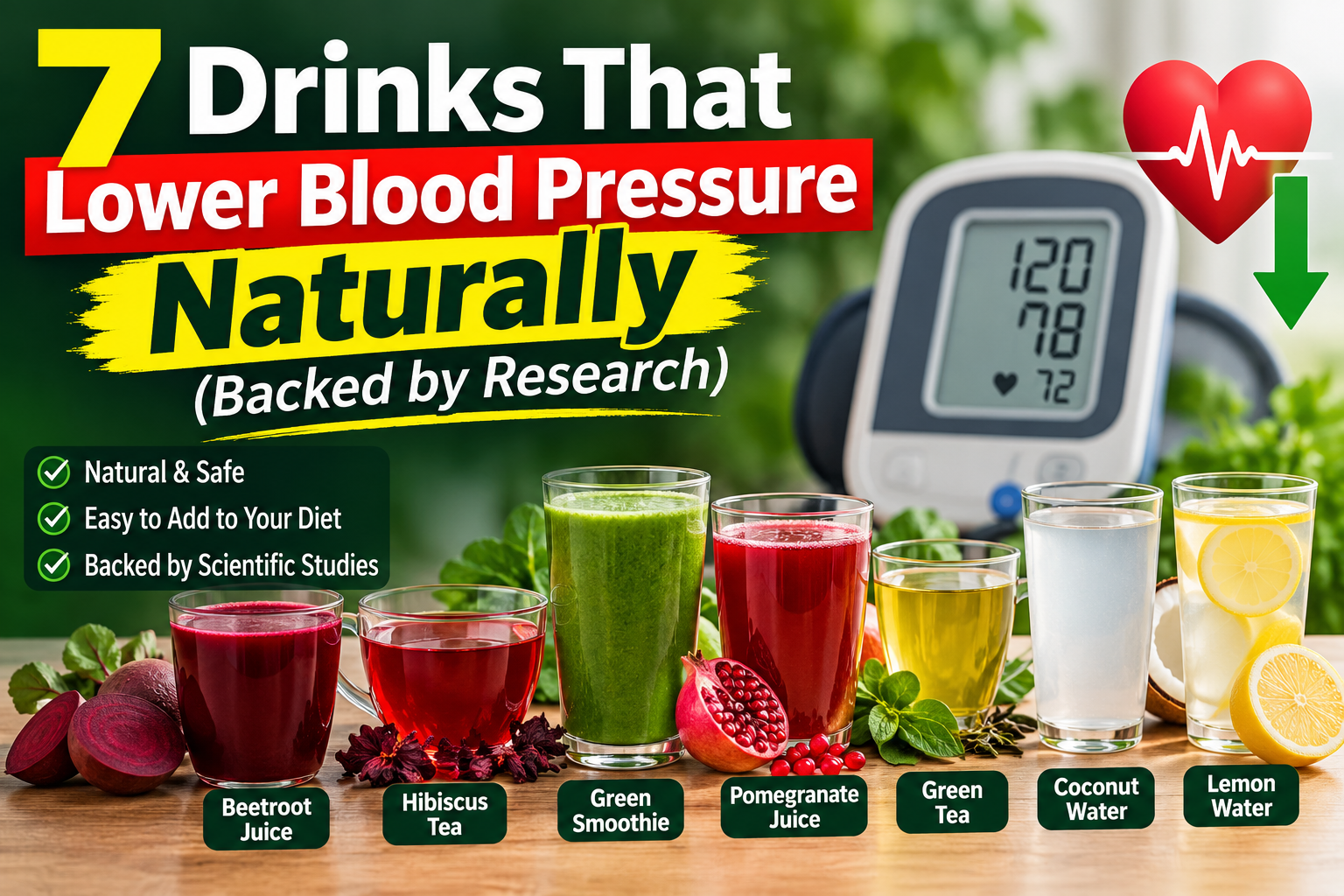
The most impactful dietary sources: spinach, arugula, rocket, beetroot, celery, and pomegranate are among the most nitrate-rich foods available. Regular consumption creates a meaningful substrate for nitric oxide production that dietary deficiency eliminates.
The exercise mechanism is equally direct: as little as 20 minutes of brisk walking measurably increases nitric oxide production by stimulating endothelial shear stress. You don’t need intense training — you need consistent movement.
Ready to Give Your Body the Targeted Support That Lifestyle Alone Can’t Fully Provide?
Diet and exercise build the foundation. But for most people over 40 — dealing with decades of declining production and the cumulative effects of stress, age, and environmental exposure — targeted nutritional support fills the gap that lifestyle changes alone cannot fully close.
Formulated with the precursors and protective antioxidants your body needs to produce and sustain healthy nitric oxide levels — even as natural production capacity declines with age. Pair it with the habits in this guide and address nitric oxide from every angle simultaneously.
The Signs Your Nitric Oxide May Be Low
Because nitric oxide affects so many systems simultaneously, its decline produces a wide range of symptoms that most people attribute to unrelated causes — or simply accept as inevitable aging:
- Persistent fatigue despite adequate sleep — reduced oxygen delivery to mitochondria
- Cold hands and feet — poor peripheral circulation from constricted vessels
- High or creeping blood pressure — vessels unable to maintain healthy dilation
- Slow workout recovery — reduced nutrient delivery to recovering muscle tissue
- Brain fog and poor concentration — reduced cerebral blood flow
- Reduced exercise capacity — muscles fatiguing faster from lower oxygen availability
- Poor sleep quality — vascular dysfunction disrupts the restorative processes that occur during sleep
If several of these resonate — your nitric oxide levels deserve attention. These are not separate problems to address separately. They share a common upstream cause.
Bottom Line: Why Nitric Oxide Is Your Body’s Quiet Hero
Nitric oxide is one of the most important molecules your body produces — and one of the least discussed outside of cardiovascular research circles.
You don’t feel it working when levels are healthy. But when levels drop, you feel the effects across your entire system — in your energy, your circulation, your physical performance, your mental clarity, and your long-term heart health.
Supporting healthy nitric oxide levels through movement, real food, quality sleep, stress management, and targeted nutrition is one of the highest-leverage things you can do for how you feel today and how well your heart functions over the coming decades.
The molecule is invisible. The difference it makes is not.

Support the Molecule That Supports Everything Else — Starting Today
You now understand what nitric oxide does, why it declines, and exactly how to address it. The only step left is giving your body the complete support it needs to restore and maintain healthy levels.
Join thousands of people who stopped accepting fatigue, brain fog, and poor circulation as their baseline — and gave their body the one molecule that makes everything else work better. Your energy. Your heart. Your performance. It all starts here.
Medical Disclaimer: This article is for informational purposes only and does not constitute medical advice. If you are experiencing cardiovascular symptoms, significant fatigue, or high blood pressure, consult a qualified healthcare professional before making changes to your health routine or beginning any new supplement.
Disclosure: This post contains affiliate links. If you purchase through our link, we may earn a small commission at no extra cost to you. We only recommend products we believe deliver genuine value